
A beginner’s guide to food photography- part one
Having social media presence is almost a non-negotiable for businesses, particularly small businesses. As a former home baker, most of my leads and inquiries came from instagram.
Instagram is a visual medium and people want to see your work before trusting you with their money. It was also an easy way to share my portfolio of work, find inspiration, and be part of a community. That’s why taking photos that doesn’t suck is important!
Taking beautiful photos isn’t and shouldn’t be hard. Some of my favourite photos were taking with only one light source and a dollar store foam-board. Once you understand the science of light, every other photographic concept (composition, colour, styling) can be used artistically.
There are five main attributes of light
- Quality of light – hard light or soft light
- Contrast- low contrast or high contrast
- Direction of Light
- Intensity/brightness
- Colour- warm or cool light
In this post, we will focus on the quality of light.
Quality of Light
We determine the quality of light by observing the shadows. Are the shadows hard or soft?
A hard shadow is one that is solidly defined with a hard edge.
Look at the image below
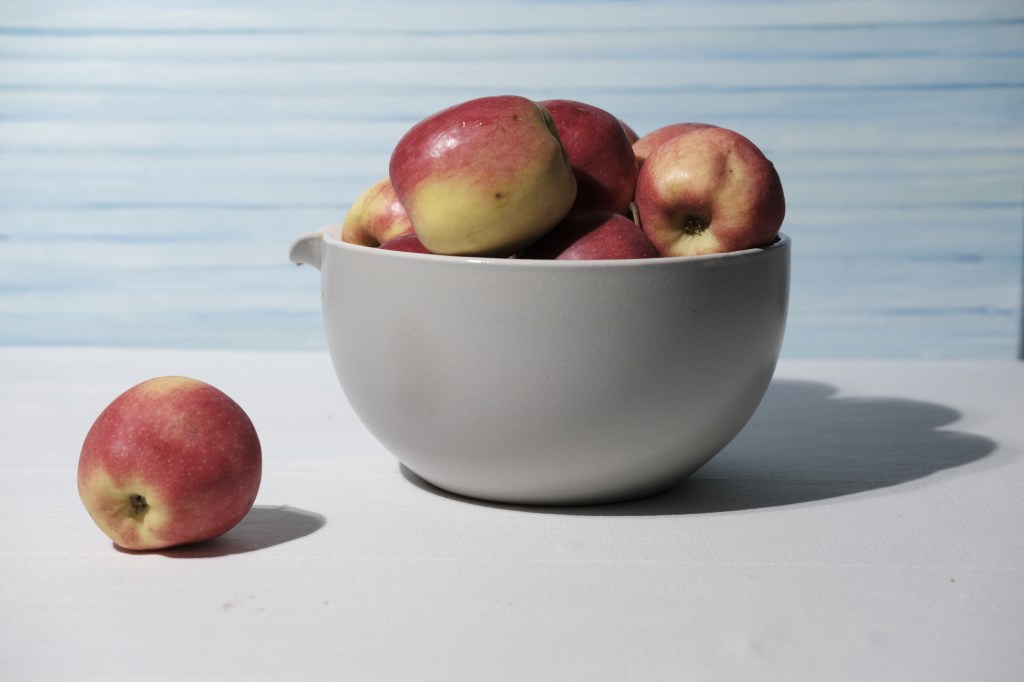
the shadow is well defined and we could easily trace the shadow lines with a pencil. Hard shadows are created by hard light
- Hard light depict surface texture and are bold with a solid edge.
A soft shadow has no clearly defined edge and not as easy to trace. We can see the shadow, but it has a blurred look to it. Soft shadows are created by soft light
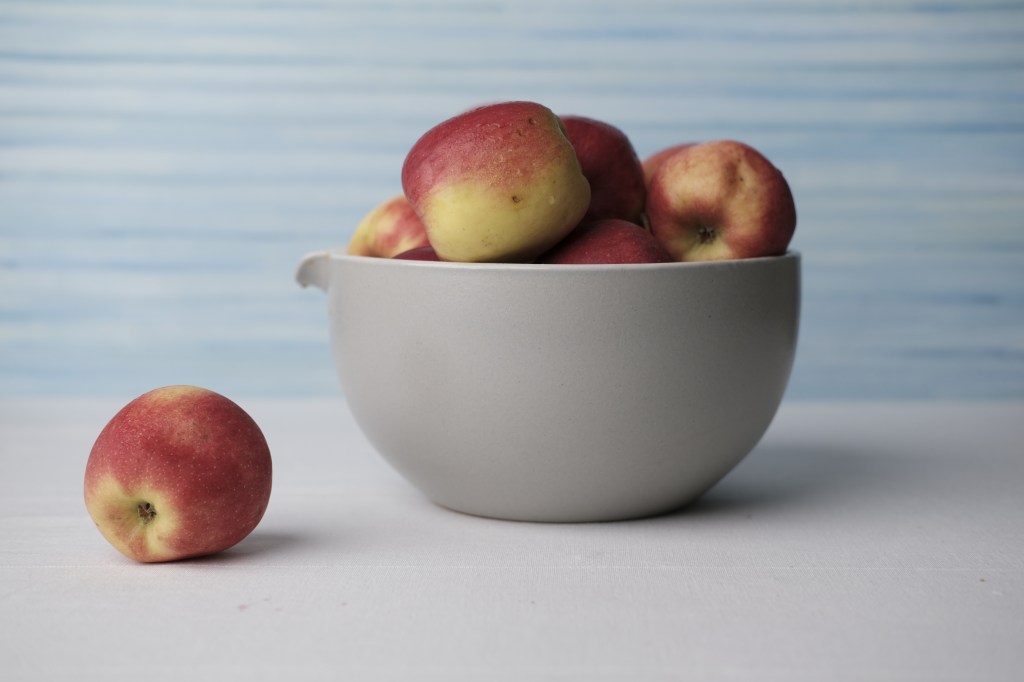
- soft light is gentler, blurs texture, and renders a quiet gentility
Compare the hard light with the soft light. Which do your prefer?

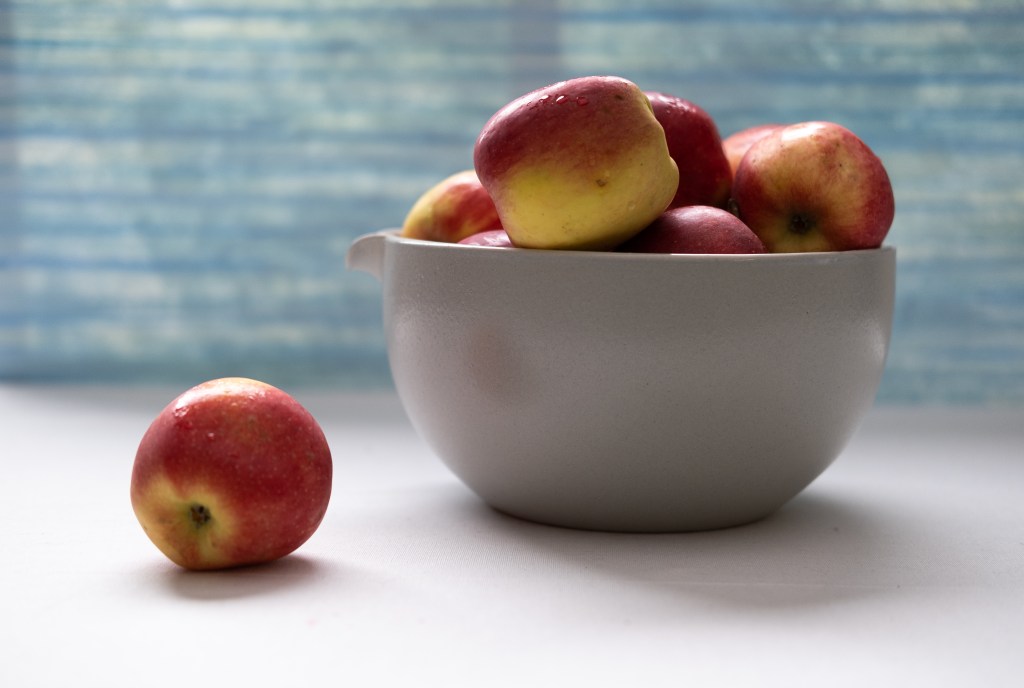
No one light quality is better than the other, although I prefer the softer light.
Most food and dessert images are shot with soft light because of the delicate and comforting nature of food as a subject.
However, beautiful food images have been shot with hard light to tell a story of time, place, and emotion. Photography is an art, and light is an important aspect to telling a compelling story.
There are no rules!
You can mix both hard and soft light in your image. For example, your environment and props could be lit with a hard light source, but your subject could be lit with soft light or vice versa. Just make sure that some shadow is evident to create depth and dimensionality.
How to Create Hard or Soft Shadows
The single most important determinant in controlling the quality of the light is the size of the light relative to the subject. How big, close, tall is the light to the subject?
A small light source will almost always render a crisp hard edged shadow. Think of the shadows thrown during a cloudless sunny day.
A large light source will create a soft shadow. Just like the harshness of the sun is made softer by a passing cloud or on a cloudy day, we can use this same concept in softening our light source.
Hard light can be made softer by diffusing or scattering the light. The larger the light source the softer the light.
A white piece of translucent fabric, placed between the light and the subject, will soften the light acting like our cloud. The quality and type of the material with affect the intensity of the diffusion.
Softboxes and umbrellas are light modifiers used to diffuse, control and manipulate light. We will discuss light modifiers in another blog post.
Shooting with artificial light allows you to get the quality of light you want anytime or day. I currently use a continuous light and a Bowens mount soft box and I have lots of white fabric, paper, wax or parchment paper to diffuse light.
If you are shooting in natural light (light controlled by the sun and environment), it is impossible to create hard shadows from soft light. You would have to wait for conditions that are more ideal.
Quick Notes:
- The higher/taller the light source, the shorter the shadows
- The lower/shorter the light, the longer the shadows.
- The closer the light, the higher the intensity
- The farther the light, the lower the intensity
What next?
When crafting a food scene and story, consider the quality of light used when telling your story. You may ask yourself the following questions?
- What is the time of day for the food scene? Morning, evening, sunset, sunrise, nighttime
- What does the weather look like in my story? sunny day, cloudy and grey, sunny with a bit of cloud?
- Is the food textured? do I want to depict the texture of the food, props, environment? – note hard light is best for depicting texture and soft light softens texture.
- Do you want soft or hard shadows?
- Look at different photos and paintings and observe the quality of the light. How did the artist depict light and shadow?
That’s is it!
Chisom
 Team Nrinka